Shop by need
Shoes for bunions
A bunion does not need a shoe that stretches. It needs a shoe that was wide in the first place, with nothing stitched across the joint and no pressure pushing the toe further over.
Why width alone is not the answer
Plenty of shoes are sold as bunion-friendly because the material gives. Give is not the same as room. A stretched upper still pulls back against the joint every step, and the seam that was sitting comfortably before it stretched is now sitting directly on the prominence.
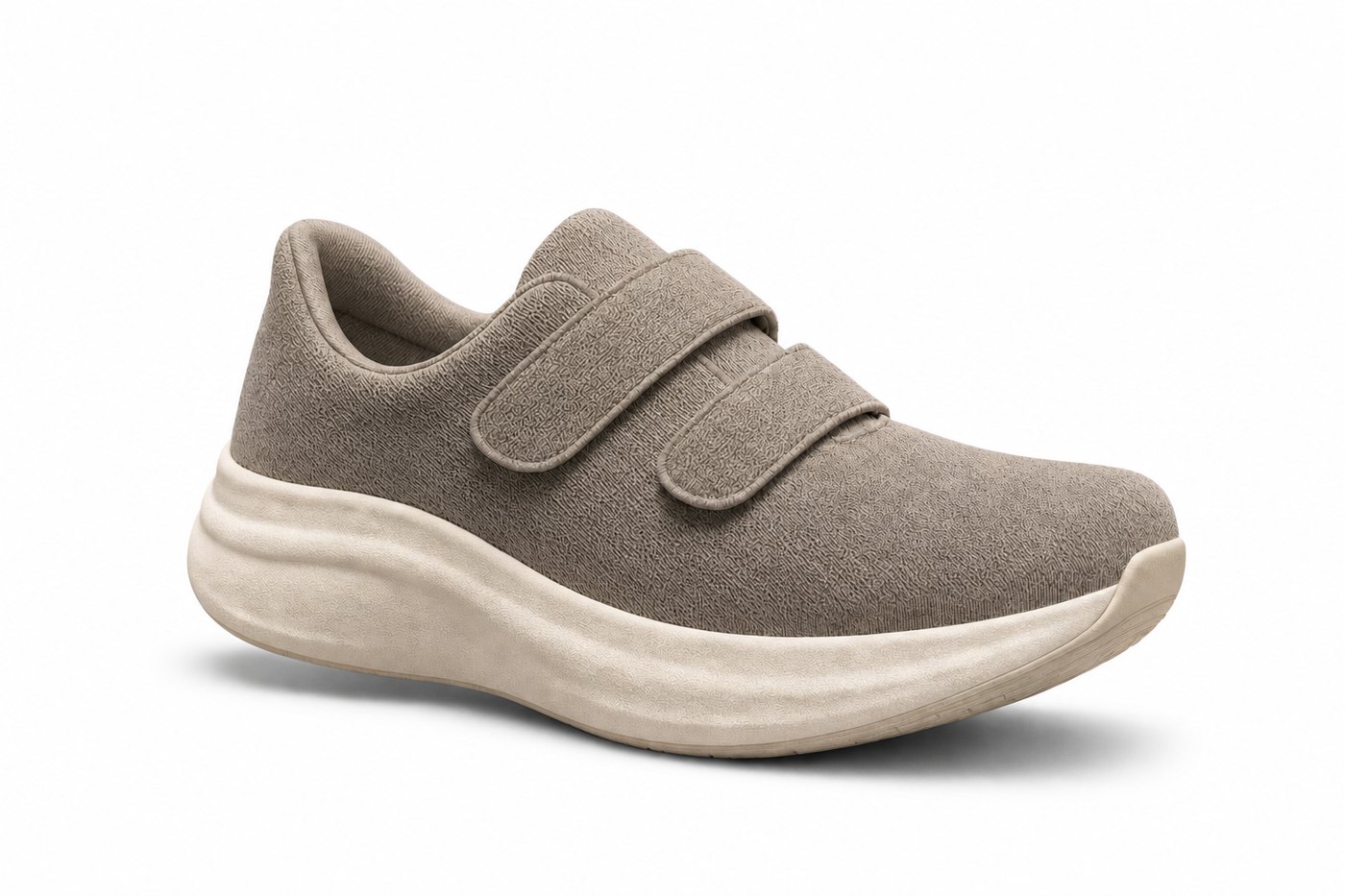
What relieves a bunion is three things at once: girth at the ball of the foot, a toe box that does not taper towards the big toe, and no stitching over the joint. The Everyday has all three, which is why it looks less pointed than a fashion trainer — that shape is the whole point.
The toe box shape matters more than the size
Most trainers taper. The centre line of the shoe runs towards the second toe, which pushes the big toe outwards — exactly the direction a bunion is already going. A straighter last lets the big toe sit where it wants to. You will notice the difference within a day if you have been in tapered shoes.
Depth counts too. Where the big toe has drifted, the second toe often rides up over it, and a shallow toe box then presses on the knuckle of that second toe. Extra vertical room removes a pressure point most people never think to look for.
Which fitting to start with
| Fitting | Roughly equals | Choose it if |
|---|---|---|
| EE (Wide) | About one fitting above a standard high-street trainer | Standard trainers feel tight across the ball of the foot but you can wear them |
| EEEE (Extra Wide) | Two to three fittings above standard | Bunions, a spreading forefoot, or you wear a custom orthotic |
| 6E (Ultra Wide) | The widest fitting sold in UK retail | Oedema, lymphoedema, bandaging, or feet that change size through the day |
For an established bunion, most people are best served starting at EEEE. If you also have swelling, or a bunion on one side and a splayed forefoot on the other, go to 6E for the affected foot — we will happily supply two different widths.
What footwear can and cannot change
Shoes do not straighten a bunion. Nothing non-surgical does. What good footwear does is remove the pressure that makes it hurt and slow the irritation that makes it progress faster. Those are worth having, but they are comfort and protection, not correction.
If the joint is painful at rest, stiff, or the toe is crossing over its neighbour, see a podiatrist. Surgery is a real option for the right person, and a proper assessment tells you whether you are that person.
Living with it day to day
Wear the widest shoe you can for the longest part of the day, not just for walks. Bunion pain accumulates from hours in narrow work shoes far more than from a single long walk in good ones. Toe spacers can help some people and irritate others — try them at home before committing to a day out. Keep the skin over the joint moisturised, because thickened dry skin over a prominence splits.
Common questions
Will these stop my bunion getting worse?
I have a bunion on one foot only. What do I order?
Are these good for bunionettes, on the little toe side?
Can I wear a toe spacer inside them?
Do they come in a wide fit for women specifically?
Where to go next
One trainer, three fittings, sixty days to get it right
The Everyday is £89 in EE, EEEE and 6E on every size from UK 3 to 13. Free UK delivery, and if the width is wrong we post the replacement before the first pair comes back.