Shop by need
Diabetic footwear
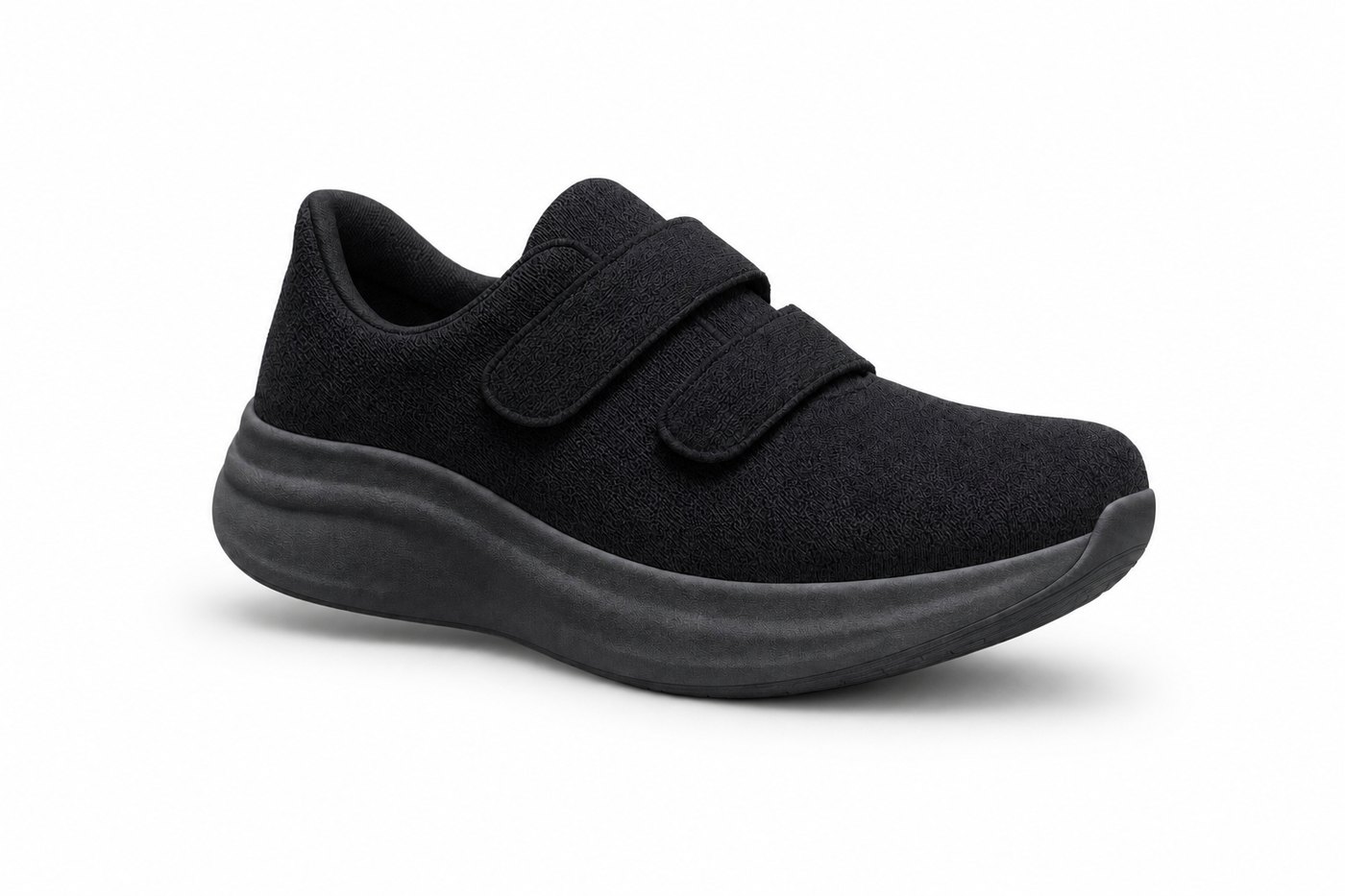
Most diabetic foot damage starts with a shoe. Something rubs, the skin breaks, and because sensation is reduced nobody notices for days. Everything about The Everyday is aimed at removing the places that rubbing starts.
The one rule that matters
If you have reduced sensation in your feet, you cannot use pain to judge fit. That single fact rewrites how footwear should be chosen. A shoe that feels fine can still be quietly destroying skin, and by the time you can see the damage it is already a wound.
So the fit has to be verified by looking rather than feeling: check your feet every evening, and treat any pink mark that is still there after twenty minutes as a fitting failure, not a minor thing.
What a diabetic-friendly shoe needs
No interior seams. Stitching is the single commonest cause of rubbing. The Everyday's lining is continuous through the toe box and around the collar.
Depth at the toes. Clawed or retracted toes need vertical room, not just width. A shallow toe box presses the nail bed from above, which is how many ulcers begin.
Width that is genuine. EE, EEEE and 6E fittings, cut on a wide last rather than stretched from a standard one.
Removable depth for a device. If you have been given a custom insole, the shoe has to give it a home without lifting your heel.
Adjustment without laces. Straps let you set the shoe accurately even with reduced hand function or poor eyesight, and re-set it if your foot changes.
A closed toe and a firm heel. Protection from knocks, and enough structure that the foot does not slide.
Which fitting to start with
| Fitting | Roughly equals | Choose it if |
|---|---|---|
| EE (Wide) | About one fitting above a standard high-street trainer | Standard trainers feel tight across the ball of the foot but you can wear them |
| EEEE (Extra Wide) | Two to three fittings above standard | Bunions, a spreading forefoot, or you wear a custom orthotic |
| 6E (Ultra Wide) | The widest fitting sold in UK retail | Oedema, lymphoedema, bandaging, or feet that change size through the day |
If you wear a prescribed insole, start at EEEE. If you have swelling as well as neuropathy, start at 6E. There is more detail in the neuropathy and footwear guide.
A checking routine worth keeping
Every evening, take the shoes off and look at the whole foot including between the toes and around the heel, using a mirror or a phone camera for the sole. Run a hand inside each shoe for grit, a folded insole or a nail coming through. New shoes: wear them for an hour on day one, two hours on day two, and inspect after each wear before going any further.
Contact your podiatry or diabetic foot service the same day for any break in the skin, any new redness or heat, any swelling in one foot, or any discharge or smell. Do not wait for an appointment to become convenient — early treatment is what preserves feet.
What this shoe is not
The Everyday is a well-made, deep, seam-free trainer. It is not a prescription device, it is not bespoke, and it does not treat diabetes or neuropathy. If you are in a high-risk category, or you have a history of ulceration or Charcot changes, your footwear should be signed off by your podiatry team — take the shoe to your next appointment and ask.
Common questions
Are these NHS diabetic shoes?
Can I wear my prescribed insole in them?
I have neuropathy. How do I know they fit if I cannot feel them?
Do you do a wider fitting than 6E?
Are they suitable for someone with a healed ulcer?
Where to go next
One trainer, three fittings, sixty days to get it right
The Everyday is £89 in EE, EEEE and 6E on every size from UK 3 to 13. Free UK delivery, and if the width is wrong we post the replacement before the first pair comes back.